
Begin with the parties
Choose a bargain, audience, parley or another social scene. Describe the parties, stakes and starting attitude so the conversation has a clear purpose.
Tabletop social encounters
Every side wants something.
Every concession matters.
Keep the conversation playable.
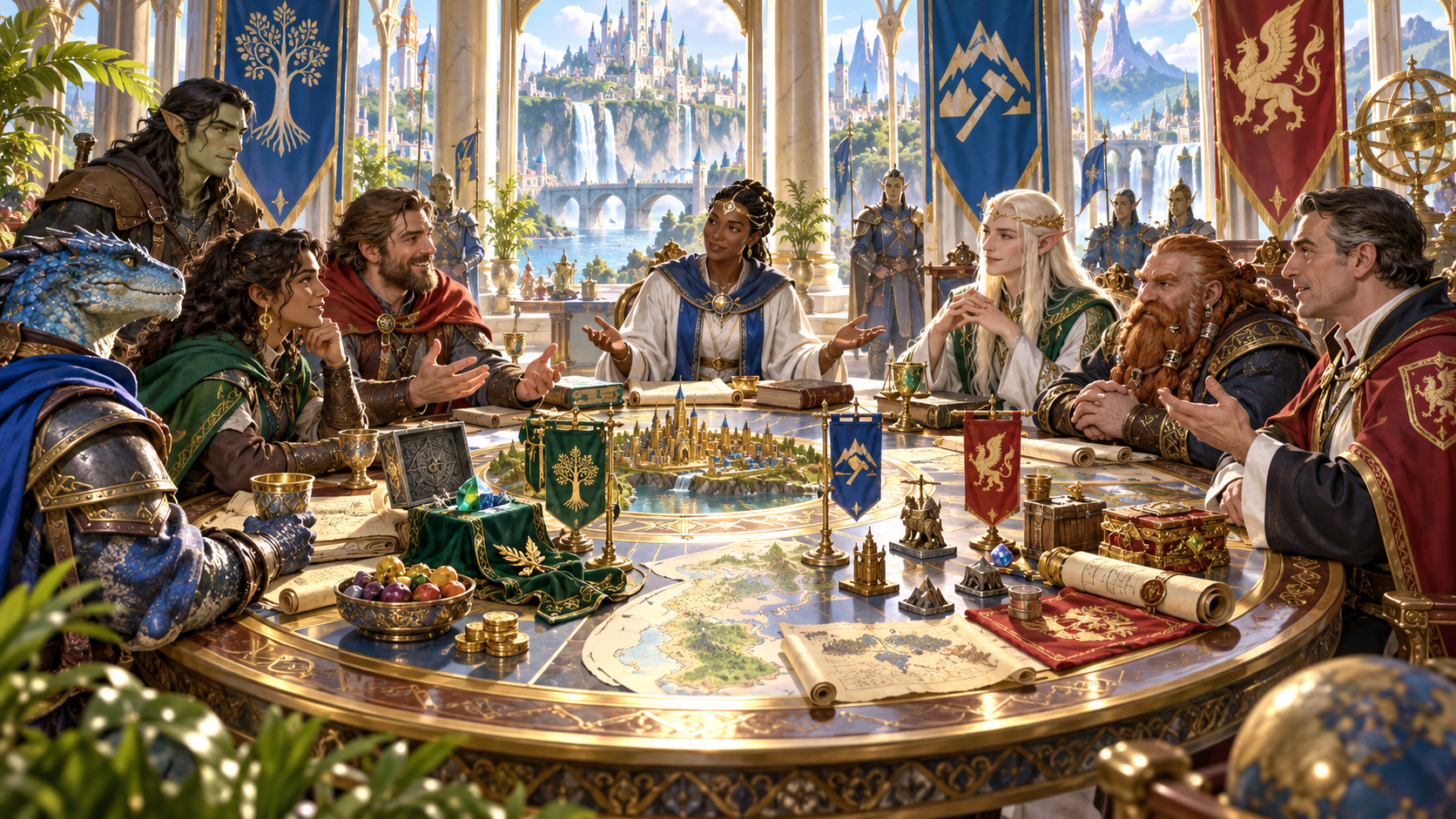
One difficult conversation
Prepare choices that matter at the table.
Choose a bargain, audience, parley or another social scene. Describe the parties, stakes and starting attitude so the conversation has a clear purpose.
Prepare demands, offers, concessions and deal breakers. Review full agreement, partial compromise and a failure path without deciding the players words for them.

Stakes leverage and concessions
The illustration shows two delegations discussing a bridge model, with coins, grain, heraldic medals and a key arranged across their table.
Prepare what each party wants, what they can offer and what they cannot concede. Add private motives and pressure behind the public positions.
People positions and pressure
Build a conversation with meaningful choices.
Choose a negotiation, parley, audience, interrogation, mediation, bargain, hostage talk or diplomatic meeting. Begin with the kind of conversation your scene needs.
Describe who takes part and what each side risks. Set the participant count, privacy, urgency and starting attitude.
Prepare what each participant openly wants. Give the players clear demands and offers to answer in the conversation.
Prepare the interests behind those positions and any hidden information. Keep those details in your Dungeon Master notes when reviewing the encounter.
Set relationships and relative power between the parties. Consider why they meet, who can walk away and what each side needs.
Add leverage, witness pressure and possible outside interference. Decide what makes the conversation difficult and why a concession matters.
Prepare concrete demands and offers for the parties to discuss. Give the scene something the players can accept, reject or negotiate.
Review a sequence of possible concessions, reactions and deal breakers. Keep alternatives available as the conversation changes.
Prepare interruptions, full agreement, partial compromise and a failure path. Review several viable endings before choosing how the scene unfolds.
Review and edit the encounter, save a record, copy useful material, download a structured result or print your preparation.
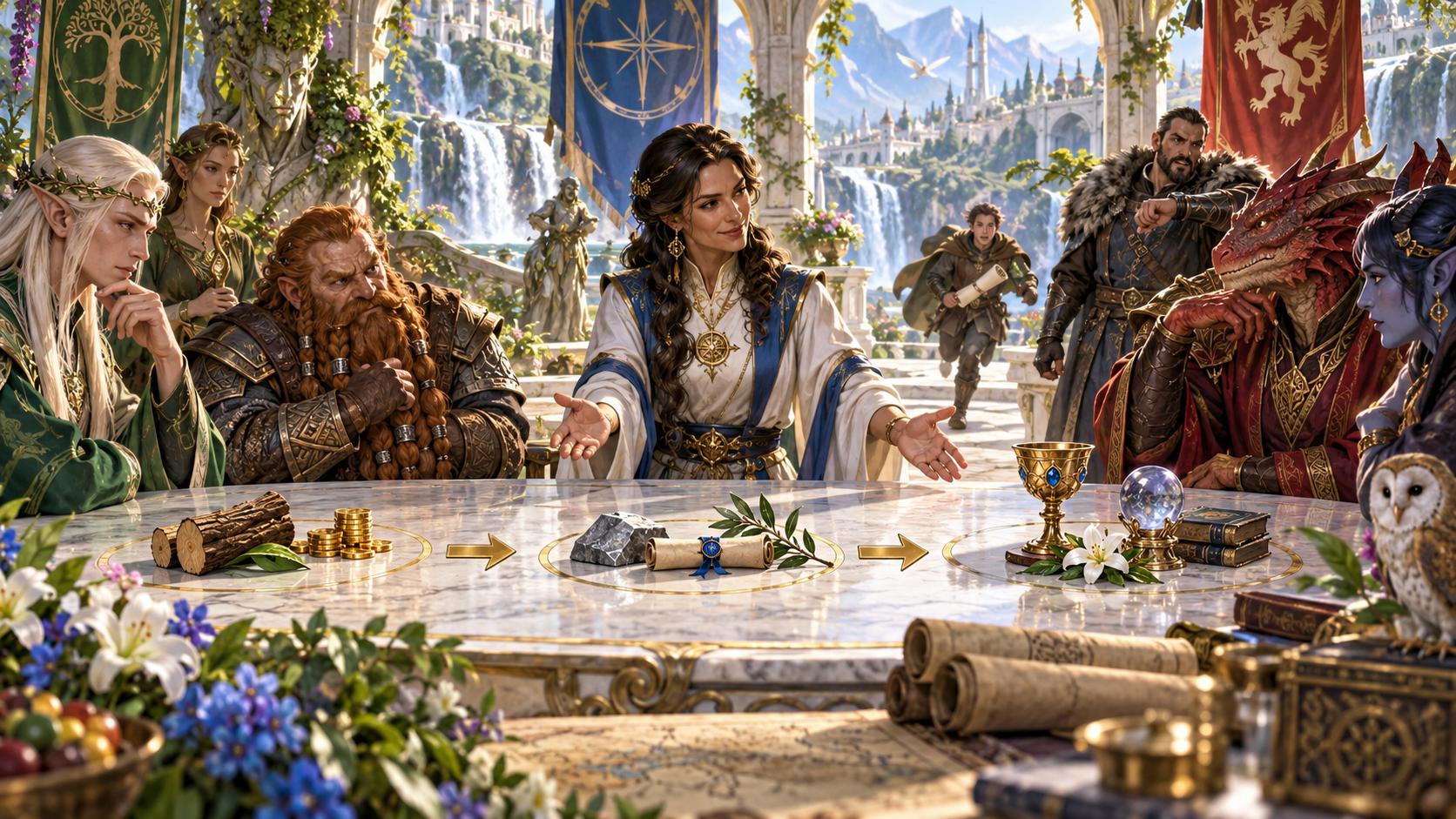
A mediator and possible concessions
The illustration shows a mediator between several delegates. Arrows connect groups of resources, a sealed scroll, a goblet and other possible concessions on the table.
Set the stakes, relationships and urgency. Review demands, offers and a concession ladder, then choose reactions and interruptions that fit what the players say.
Prepare the meeting
A focused workflow for social play.
Start with a negotiation, audience, mediation, interrogation or another kind of meeting. Decide why the parties have come together.
Describe the participants, starting attitude, privacy and urgency. Give each side something to gain and something to lose.
Add relationships, relative power, hidden information, witnesses, leverage and outside interference. Define anything the encounter should avoid.
Review offers, concessions, deal breakers, interruptions and possible endings. Use the material as the players make their choices.
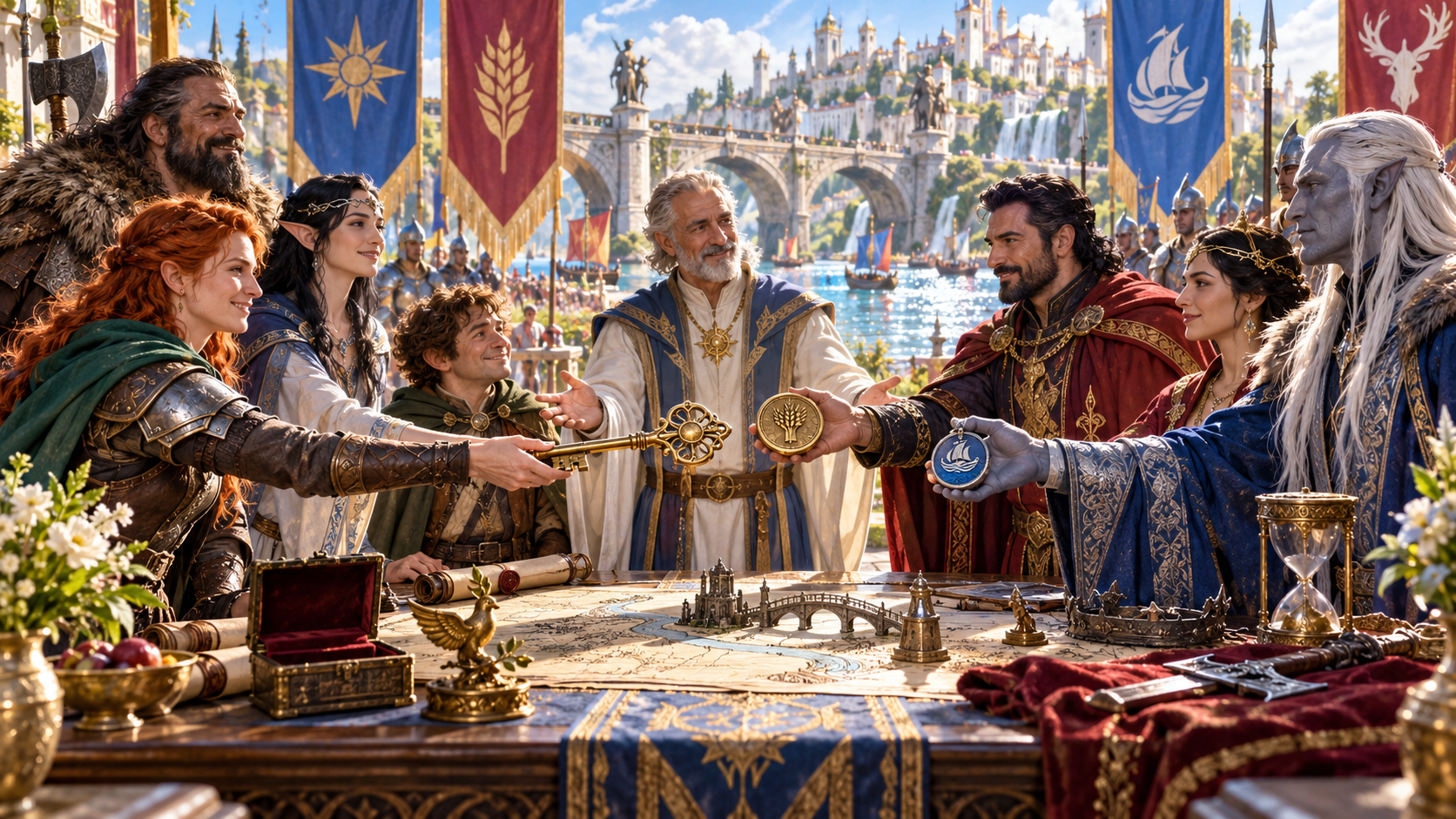
A riverside agreement
The illustration shows riverside delegates exchanging a key and heraldic tokens over a map, with a central witness and a city beyond the meeting.
An agreement is one possible ending. Review partial compromise and failure paths too, then decide which response fits the choices made at your table.
Keep the encounter useful
Bring the right material to the table.
Review the scene, participants, public positions, private motives and hidden information. Edit the preparation to fit your campaign.
Save an encounter record and reopen it when useful. Search, tag and annotate important conversations alongside your notes.
Review player-known context and full Dungeon Master material. Select the details you want players to receive before copying or sharing them.
Copy useful material or the complete encounter. Download a structured record or print the preparation for your session.
Your workspace and related tools
Open your tools through your VISINVOKE account.

Open the generator in DCC. Get the desktop workspace through your account installer page.

Prepare a separate story about making amends, its cost and how others respond. Use that material alongside your adventure.
Product illustrations show a council, a bargain, possible concessions and a riverside agreement.
Questions and answers
Parties, motives, leverage, concessions, outcomes, records and account access.
Prepare negotiations, parleys, audiences, interrogations, mediations, bargains, hostage talks and diplomatic meetings with participants, motives, stakes, leverage, offers, concessions and possible outcomes.
Choose the kind of conversation, name the parties and describe the stakes. Set the participant count, privacy, urgency and starting attitude, then review the encounter before play.
Refine relationships, relative power, hidden information, truth, violence risk, leverage, witnesses, complexity, outside interference and anything the scene should avoid.
The encounter gives you participants, positions, offers and possible outcomes to work with. Players choose their words and decisions, and you decide how the conversation unfolds.
Review the full Dungeon Master material and player-known context. Select what to share with players, copy useful material, save and reopen an encounter record, download a structured result or print it.
Open Social Encounter & Negotiation Generator from the Generators collection in VISINVOKE Desktop Control Centre. Create an account or sign in and get DCC through your account installer page.
Continue in VISINVOKE
Create an account or sign in. Get Desktop Control Centre through your account installer page and open the generator.
Keep encounters and conversation notes beside your campaign preparation.